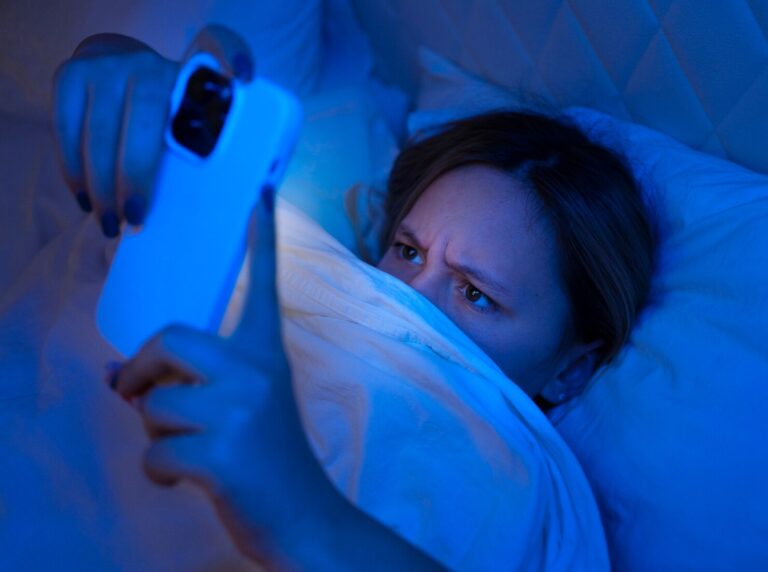
Modern life has quietly normalized something that is damaging our minds every night: scrolling until we fall asleep.
The best night routine without a phone is not just a trendy wellness habit anymore. It has become one of the most effective ways to improve emotional balance, reduce anxiety, restore healthy sleep habits, and protect long-term mental wellness. A proper phone-free night routine helps your brain slow down naturally, supports deep rest, and creates emotional stability that constant nighttime screen exposure often destroys.
If you constantly feel mentally exhausted, emotionally overstimulated, unable to sleep peacefully, or anxious at night, your smartphone may be a bigger reason than you realize.
This guide explains exactly how a bedtime routine without phone usage can improve your sleep and mental health, why a digital detox before bed matters scientifically, and how to build a calming nighttime ritual that actually works in real life.
A screen-free bedtime routine improves mental health because it reduces brain overstimulation, lowers stress hormones, supports melatonin production, improves sleep quality, decreases anxiety, and helps the nervous system relax naturally before sleep.
Key Benefits of a Phone-Free Night Routine
- Better sleep naturally
- Reduced nighttime anxiety
- Lower stress levels
- Improved emotional regulation
- Less mental fatigue
- Reduced doomscrolling
- Improved focus the next day
- Stronger sleep and mental health connection
- Better mood stability
- Healthier dopamine balance
What Is a Healthy Nighttime Routine?
A healthy nighttime routine is a consistent set of calming activities done before bed that prepare the body and mind for restful sleep without overstimulation.
The most effective routines typically include:
- Reducing screen time at night
- Relaxing lighting
- Reading or journaling
- Meditation or breathing exercises
- Stretching
- Herbal tea
- Reflection or gratitude practice
- Going to bed consistently
A mindful bedtime routine supports emotional recovery, brain restoration, and long-term psychological resilience.
Why Phones Disrupt Sleep and Mental Health
How Phones Affect Sleep and Mental Health
Your brain is not designed to process endless stimulation right before sleep.
When you scroll through social media, watch videos, reply to messages, or consume stressful information at night, your nervous system remains alert instead of entering a restful state.
Here’s what happens biologically:
| Phone Activity Before Bed | Effect on Mental Health |
| Blue light exposure | Suppresses melatonin |
| Social media scrolling | Increases anxiety and comparison |
| Notifications | Keeps brain hyper-alert |
| Emotional content | Raises stress hormones |
| Doomscrolling | Triggers mental overstimulation |
| Fast dopamine hits | Disrupts emotional balance |
| Late-night texting | Prevents mental decompression |
This is why experts increasingly recommend a nighttime routine without screens.
Does Using Your Phone Before Bed Affect Mental Health?
Yes. Research consistently shows that excessive nighttime phone usage can negatively affect emotional well-being, sleep quality, stress levels, and anxiety regulation.
Common Mental Health Effects of Nighttime Phone Use
1. Increased Anxiety
Constant notifications and endless content keep the brain emotionally activated.
This can lead to:
- Racing thoughts
- Restlessness
- Overthinking
- Sleep anxiety
- Emotional exhaustion
That’s why many individuals are looking for natural nighttime habits that can help lower anxiety and create a calmer state of mind.
2. Poor Sleep Quality
Poor sleep directly impacts:
- Mood
- Cognitive function
- Emotional regulation
- Stress tolerance
A proper mental health night routine helps restore healthy sleep cycles.
3. Dopamine Overload
Social media platforms are designed to create rapid dopamine spikes.
At night, this overstimulation prevents the brain from calming down.
A dopamine detox at night allows your nervous system to rebalance naturally.
4. Emotional Burnout
Late-night content consumption can expose you to:
- Negative news
- Online conflict
- Comparison culture
- Information overload
This emotional fatigue accumulates silently over time.
Why Avoiding Screens Before Sleep Helps Mental Health
The Science Behind Digital Detox Before Bed
Your brain needs a transition period before sleep.
Without one, your nervous system remains in “active mode.”
A proper digital detox routine before sleep creates psychological separation between daytime stimulation and nighttime recovery.
Benefits include:
- Improved melatonin production
- Better REM sleep
- Reduced cortisol levels
- Lower nighttime stress
- Increased emotional stability
- Better next-day productivity
- Improved memory consolidation
This explains why many therapists recommend a calming night routine without technology for anxiety and stress management.
The Benefits of a Phone-Free Night Routine
1. Better Sleep Naturally
The biggest benefit is deeper, higher-quality sleep.
When you stop scrolling before bed:
- You fall asleep faster
- You wake up less often
- Your sleep becomes more restorative
This is essential for both physical and emotional health.
2. Reduced Anxiety at Night
A stress-free bedtime routine lowers mental stimulation and reduces emotional overload.
Many people notice:
- Fewer racing thoughts
- Less nighttime panic
- Improved calmness
- Better emotional control
3. Stronger Emotional Resilience
Good sleep improves your ability to handle stress during the day.
This is why quality sleep plays such an important role in maintaining strong mental and emotional well-being.
4. Improved Focus and Productivity
People who practice a phone-free night routine often experience:
- Sharper concentration
- Better memory
- Increased motivation
- Less mental fog
5. Healthier Relationships
Many people spend evenings physically present but mentally absorbed in screens.
An unplugged night routine encourages:
- Better conversations
- More presence
- Emotional connection
- Family bonding
What Happens When You Stop Using Your Phone Before Bed?
Within days, many people notice major mental changes.
Common Positive Changes
Week 1
- Falling asleep faster
- Reduced overstimulation
- Less doomscrolling
Week 2
- Improved mood stability
- Reduced nighttime anxiety
- Better energy levels
Week 3+
- Better emotional resilience
- Improved focus
- More mindfulness
- Stronger healthy sleep habits
The cumulative effects can be surprisingly powerful.
How to Stop Using Your Phone Before Bed
Breaking nighttime phone dependence can feel difficult because smartphones trigger behavioral habits and dopamine loops.
Here’s how to make the transition easier.
Step-by-Step Phone-Free Night Routine
Step 1: Set a Digital Curfew
Stop using screens 30–60 minutes before sleep.
This is one of the simplest screen-free evening routine ideas that delivers immediate benefits.
Step 2: Charge Your Phone Outside the Bedroom
Physical distance reduces temptation dramatically.
This single change can transform your nighttime digital detox success rate.
Step 3: Replace Scrolling With Relaxing Rituals
Instead of consuming stimulation, create calm.
Examples:
- Reading
- Journaling
- Meditation
- Stretching
- Herbal tea
- Deep breathing
These activities support a healthy night routine for mental health.
Step 4: Use Warm Lighting
Bright white lighting signals wakefulness to the brain.
Warm lamps help prepare the nervous system for rest.
Step 5: Create Consistent Sleep Timing
Consistency stabilizes your circadian rhythm.
Healthy sleep habits matter more than occasional “perfect” nights.
The Best Screen-Free Bedtime Routine for Mental Health
Example 60-Minute Routine
| Time | Activity |
| 9:00 PM | Put phone away |
| 9:05 PM | Dim lights |
| 9:10 PM | Herbal tea |
| 9:20 PM | Light stretching |
| 9:30 PM | Journaling or gratitude |
| 9:40 PM | Read a physical book |
| 10:00 PM | Meditation or breathing |
| 10:15 PM | Sleep |
This type of self-care night routine helps the body naturally transition into rest.
Best Bedtime Habits for Mental Health
Habits That Actually Help
Journaling
Helps release mental clutter.
Reading Physical Books
Reduces stimulation compared to screens.
Meditation
Improves nervous system regulation.
Gentle Stretching
Releases physical tension stored during the day.
Gratitude Practice
Encourages positive emotional processing.
Breathwork
Activates the parasympathetic nervous system.
These evening wellness habits support emotional recovery and better sleep naturally.
Common Mistakes That Ruin a Healthy Night Routine
1. Doomscrolling in Bed
Your bed should signal sleep, not stimulation.
2. Watching Stressful Content
News, arguments, and emotionally intense videos increase cortisol.
3. Using Phones as Alarm Clocks
This often encourages late-night checking.
Use a traditional alarm instead.
4. Inconsistent Sleep Timing
Irregular sleep schedules disrupt circadian rhythms.
5. Trying Extreme Digital Detox Too Fast
Start gradually.
Even reducing screen time at night by 20 minutes helps.
Myth vs Fact: Phone Use Before Sleep
| Myth | Fact |
| “I sleep fine with my phone.” | Sleep quality often declines without people noticing immediately. |
| “Blue light glasses solve everything.” | Mental stimulation also affects sleep. |
| “Social media helps me relax.” | It frequently increases emotional activation. |
| “Watching videos helps me fall asleep.” | It can delay deep sleep cycles. |
| “I need my phone nearby.” | Most nighttime checking is habitual, not necessary. |
Screen-Free Evening Routine Ideas
If you struggle with boredom without screens, try these alternatives.
Relaxing Offline Activities
- Reading fiction
- Sketching
- Puzzles
- Journaling
- Yoga
- Prayer or reflection
- Aromatherapy
- Listening to calming music
- Tea rituals
- Guided breathing
- Creative hobbies
These activities create a sustainable calming night routine without technology.
The Psychology Behind an Unplugged Night Routine
Your brain craves recovery periods.
Constant digital stimulation:
- Fragments attention
- Increases stress
- Reduces mindfulness
- Weakens emotional processing
A nighttime routine without screens restores mental clarity by creating intentional stillness.
This is why many mental health professionals encourage structured nighttime digital boundaries.
Can Screen Time Before Bed Cause Anxiety?
Yes.
Excessive nighttime screen exposure can increase anxiety through:
- Information overload
- Social comparison
- Emotional overstimulation
- Blue light exposure
- Sleep disruption
- Nervous system activation
Poor sleep then worsens anxiety further, creating a cycle.
Breaking that cycle with a digital detox before bed is often highly effective.
How Sleep and Mental Health Work Together
Sleep and mental health are deeply interconnected.
Poor sleep increases:
- Irritability
- Emotional instability
- Anxiety
- Depression symptoms
- Stress sensitivity
Meanwhile, better sleep supports:
- Emotional regulation
- Cognitive recovery
- Mood balance
- Psychological resilience
This is why improving sleep naturally can significantly improve mental wellness overall.
Dopamine Detox at Night: Why It Matters
Modern apps constantly stimulate reward pathways.
At night, this overstimulation prevents the brain from entering a calm recovery state.
A dopamine detox at night helps:
- Reduce compulsive scrolling
- Improve focus
- Lower impulsivity
- Restore attention span
- Reduce mental fatigue
Even one hour away from screens before bed can create measurable improvements.
Expert-Backed Healthy Sleep Habits
Sleep Experts Commonly Recommend:
- No phone before sleep
- Cool bedroom temperature
- Consistent bedtime
- Limited caffeine late in the day
- Dim lighting at night
- Quiet sleep environment
- Relaxation rituals
- Reduced mental stimulation
These are foundational healthy sleep habits supported by sleep science.
Future Trends: Why Digital Wellness Is Becoming Essential
As screen dependence increases globally, digital wellness is becoming a major mental health priority.
Future wellness trends include:
- Phone-free bedrooms
- Digital detox retreats
- Sleep optimization coaching
- Mindfulness technology boundaries
- Screen-free evening challenges
- Nervous system recovery practices
The movement toward intentional tech use is only growing stronger.
Quick Checklist: Build Your Ideal Mental Health Night Routine
Daily Checklist
- Put phone away 1 hour before bed
- Use warm lighting
- Avoid stressful content
- Practice gratitude
- Read offline
- Stretch gently
- Maintain consistent sleep timing
- Keep bedroom screen-free
- Avoid doomscrolling
- Focus on calm activities
Frequently Asked Questions
1. Why should you stop using your phone before bed?
Phones stimulate the brain, suppress melatonin production, and increase emotional activation, making it harder to sleep and recover mentally.
2. How can I avoid my phone at night?
Start by setting a digital curfew, charging your phone outside the bedroom, and replacing scrolling with calming offline activities.
3. Does using your phone before bed affect mental health?
Yes. Excessive nighttime phone use can increase anxiety, worsen sleep quality, and contribute to emotional exhaustion.
4. What is a healthy nighttime routine?
A healthy nighttime routine includes calming activities like reading, journaling, meditation, stretching, and avoiding screens before sleep.
5. Can screen time before bed cause anxiety?
Yes. Screen exposure at night can overstimulate the brain, increase stress hormones, and disrupt sleep, which may worsen anxiety symptoms.
6. How long before bed should I stop using my phone?
Experts often recommend avoiding screens at least 30–60 minutes before sleep.
7. What are the benefits of a phone-free night routine?
Benefits include better sleep naturally, reduced anxiety, improved focus, emotional balance, and healthier dopamine regulation.
8. What can I do instead of scrolling before bed?
You can read, journal, meditate, stretch, practice gratitude, listen to calming music, or enjoy herbal tea.
9. Why does doomscrolling feel addictive at night?
Apps trigger dopamine release, creating reward loops that make scrolling compulsive and mentally overstimulating.
10. Is a nighttime digital detox really effective?
Yes. Even small reductions in nighttime screen exposure can improve sleep quality, stress levels, and emotional recovery.
Conclusion: Reclaim Your Mind by Reclaiming Your Nights
Your evenings shape your mental health more than you think.
The hours before sleep are either healing your nervous system or overstimulating it.
A consistent screen-free bedtime routine creates space for calmness, emotional recovery, better sleep, and healthier thinking. In a world built around constant notifications and endless scrolling, choosing an unplugged night routine is not just self-care anymore — it is mental protection.
You do not need a perfect routine overnight.
Start small.
Put the phone away 30 minutes earlier tonight.
Your brain, your sleep, and your mental health will notice the difference.
If this guide helped you, share it with someone who struggles with nighttime scrolling or save it as your reminder to build healthier evening wellness habits starting today.
About the Author