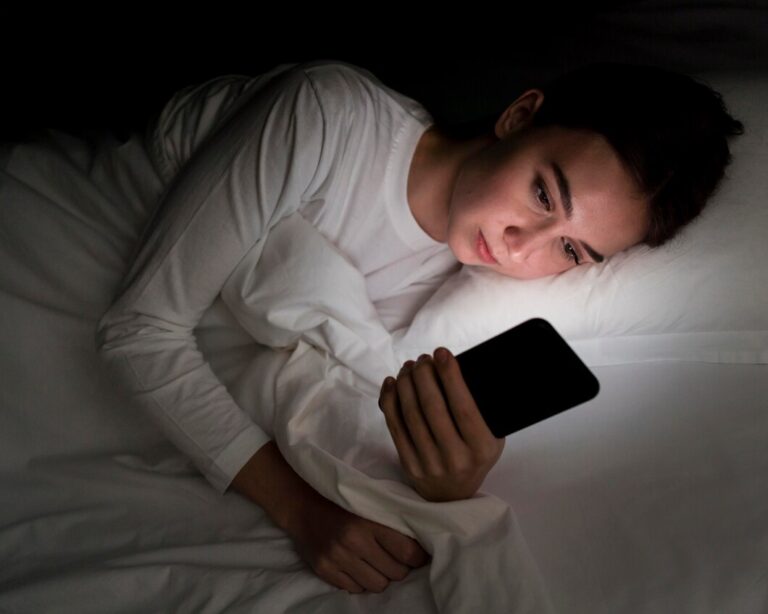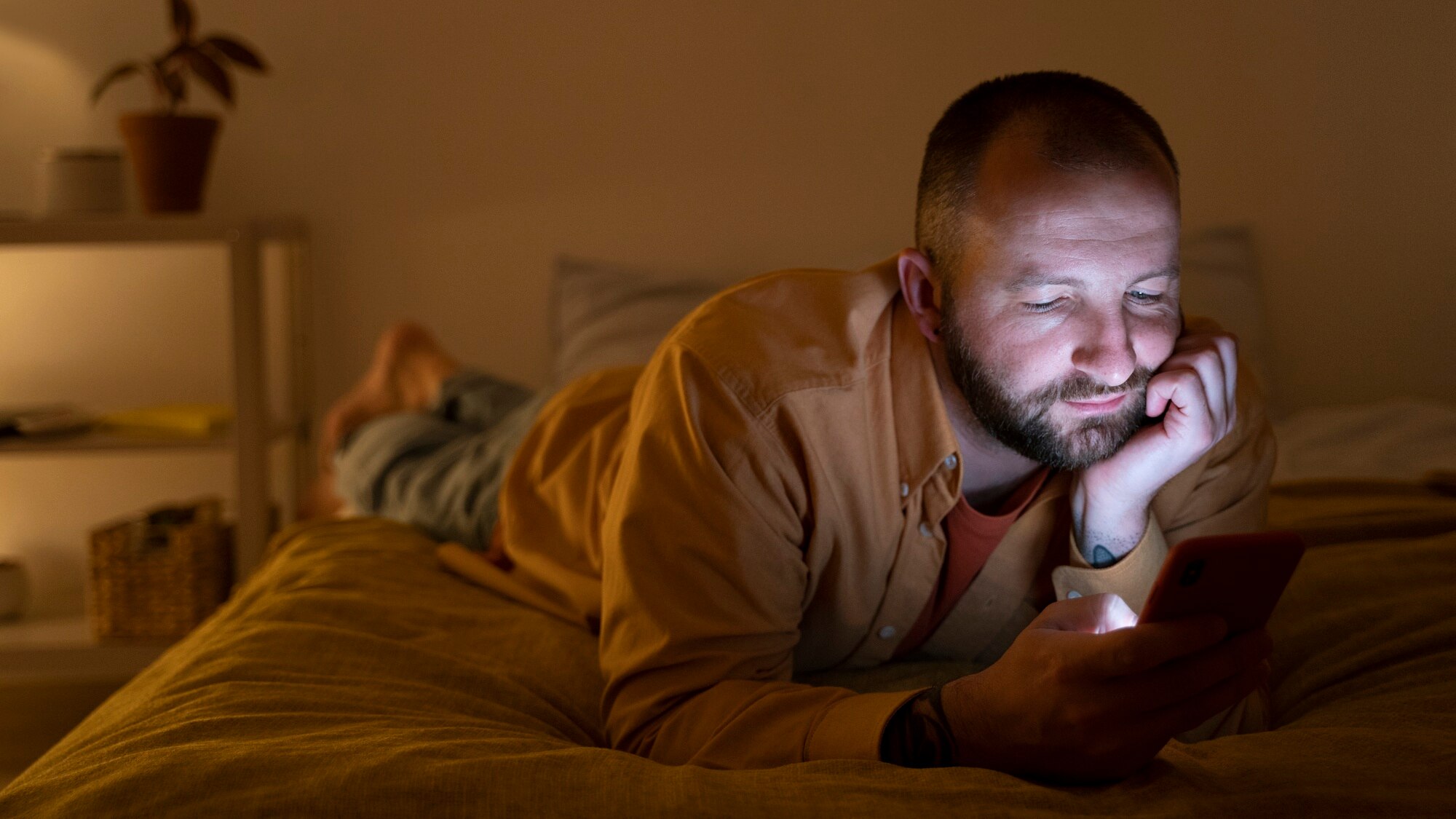
If you constantly promise yourself “just five more minutes” and then suddenly realize it is 1:30 a.m., you are not alone. Millions of people struggle to break the habit of scrolling at night, especially when the bedroom becomes the final place for social media updates, short videos, online shopping, or endless news feeds. This nightly loop can feel harmless, but over time it creates poor sleep quality, mental overstimulation, eye strain, delayed bedtime, and a stronger dependence on the phone. Learning how to stop scrolling at night is no longer just a productivity trick—it has become an essential wellness practice. Whether you are dealing with a strong nighttime phone scrolling habit, frequent doomscrolling before bed, or simply want to sleep better without a phone, changing this pattern can significantly improve your rest, focus, and emotional balance.
The good news is that bedtime scrolling is a habit, and habits can be changed with the right behavioral strategies. You do not need superhuman discipline. You need awareness, systems, and healthier replacements.
In this detailed guide, we will explore why nighttime scrolling is so addictive, how it harms your sleep, and practical ways to finally stop using your phone before bed.
Why Night Scrolling Feels So Hard to Stop
Before trying to fix it, it helps to understand why this behavior is so powerful.
Your brain does not see nighttime scrolling as a “bad habit.” It sees it as:
- entertainment
- stress relief
- emotional escape
- stimulation
- social connection
- reward after a long day
This is why the scrolling addiction before sleep often feels automatic.
At night, your mental defenses are lower. You are tired, decision-making is weaker, and your brain craves easy dopamine. Social media apps are built to provide endless novelty, so every swipe promises one more interesting thing.
This creates the classic phone addiction at night pattern:
“I’m tired, but I don’t want the day to end yet.”
So you keep scrolling not because you need content, but because your brain wants stimulation and delay.
The Real Problem With Doomscrolling Before Bed
Many people are not just casually browsing—they are caught in doomscrolling before bed.
Doomscrolling means consuming endless emotionally charged or negative content, often involving:
- bad news
- celebrity drama
- stressful world events
- comparison content
- online arguments
This keeps your nervous system alert.
Instead of preparing for sleep, your brain shifts into:
- anxiety
- vigilance
- overstimulation
- emotional reactivity
That is why tips to break doomscrolling habit are increasingly tied to mental health advice, not just sleep advice.
You may physically be in bed, but neurologically your body is nowhere near sleep mode.
How Blue Light Affects Sleep More Than You Realize
A major reason bedtime scrolling disrupts rest is understanding how blue light affects sleep.
Phone screens emit blue wavelength light that suppresses melatonin, the hormone responsible for sleep readiness.
Melatonin tells your body:
- it is dark
- it is time to slow down
- body temperature should drop
- sleep cycles should begin
When bright screen light hits your eyes, your brain gets the opposite message:
- stay awake
- remain alert
- continue processing stimulation
This means even if you feel sleepy, your biological sleep signal is delayed.
So one of the most important steps in learning how to avoid phone before sleep is recognizing that the issue is not only content—it is also light exposure.
Nighttime Screen Habits and Sleep: The Hidden Connection
The relationship between nighttime screen habits and sleep is deeper than simply going to bed late.
Phone use before sleep affects:
1. Sleep Onset
You take longer to fall asleep.
2. Sleep Depth
You experience lighter, less restorative sleep.
3. Night Awakenings
You wake more often.
4. Morning Fatigue
You feel groggy even after enough hours in bed.
This is why people trying to improve sleep by reducing screen time often report better mornings within days.
Why the Bedtime Scroll Feels Emotionally Comforting
Many users know scrolling hurts sleep, yet still do it nightly.
Why?
Because the phone has become an emotional decompression tool.
It fills:
- silence
- loneliness
- boredom
- post-work exhaustion
- avoidance of tomorrow’s stress
This makes stop bedtime scrolling more than a technical challenge—it becomes an emotional behavior shift.
For some, scrolling means:
“I finally get me-time.”
For others, it means:
“I don’t want to sit alone with my thoughts.”
Until that emotional role is understood, quitting rarely lasts.
How to Stop Scrolling at Night: Start With Awareness, Not Willpower
If you want to learn how to stop scrolling at night, the first step is to stop treating it as a discipline failure.
It is a cue-driven habit loop.
The loop usually looks like:
- Get into bed
- Feel tired but mentally active
- Pick up phone
- Receive dopamine hits
- Lose track of time
- Sleep late
- Repeat tomorrow
The goal is to interrupt the loop.
Habits break faster when you change environment and cues, not when you simply tell yourself “I should stop.”
Step 1: Create a Digital Detox Before Bedtime Window
A structured digital detox before bedtime is one of the most effective strategies.
Choose a fixed cutoff:
- 30 minutes before sleep
- ideally 60 minutes before sleep
This becomes your no-scroll transition zone.
During this time:
- no social media
- no news
- no video reels
- no unnecessary texting
Your brain needs this decompression period to move from stimulation into rest.
This single habit can dramatically reduce screen time at night.
Step 2: Stop Using Phone Before Bed by Changing Its Physical Location
Trying to resist the phone while it is in your hand is hard.
Trying to resist the phone when it is across the room is easier.
To truly stop using phone before bed, create physical separation:
- charge it outside the bedroom
- place it on a desk, not the pillow
- use a real alarm clock
The farther the device is from your body, the less automatic the habit becomes.
Many people fail because they attempt mental control without environmental control.
Step 3: Build a Healthy Bedtime Routine Without Scrolling
You cannot remove a habit without replacing the time it occupied.
A healthy bedtime routine without scrolling gives your brain another predictable wind-down pattern.
Good replacements include:
- reading a physical book
- light stretching
- journaling
- herbal tea
- breathing exercises
- skincare routine
- gratitude writing
- calming music
The body loves repetition.
Once the brain associates these actions with sleep, bedtime becomes smoother.
Step 4: Understand Phone Addiction at Night as Delayed Shutdown
Often phone addiction at night is less about social media and more about resistance to ending the day.
This is called revenge bedtime procrastination.
You stay awake scrolling because:
- daytime felt busy
- personal time felt limited
- bedtime feels like surrender
Scrolling becomes an attempt to reclaim time.
This means the solution is sometimes not just less phone—but more satisfying downtime earlier in the evening.
Step 5: Use App Barriers to Break Scrolling Addiction Before Sleep
Technology created the problem, but it can also help.
To reduce scrolling addiction before sleep, use:
- app timers
- grayscale mode
- bedtime focus mode
- social media logout
- notification shutdown
These friction points make automatic scrolling less seamless.
Even a 10-second interruption can wake up conscious decision-making.
Step 6: Learn How to Avoid Phone Before Sleep With a “Last Touch Rule”
Create a rule:
“The phone is not the last thing I touch.”
This simple ritual matters psychologically.
Instead, your last touch can be:
- a book
- journal
- blanket
- glass of water
- meditation pillow
This helps retrain bedtime identity.
You are no longer ending the day with digital stimulation.
How to Sleep Better After Screen Time if You Slip Up
Some nights you will still use your phone.
So how to sleep better after screen time when that happens?
Try this reset:
- dim all lights immediately
- put phone away
- do 5 minutes deep breathing
- avoid checking time repeatedly
- keep room cool and quiet
- do not jump into another stimulating activity
This helps calm the nervous system faster.
Bedtime Digital Wellness Tips That Actually Work
Here are powerful bedtime digital wellness tips that make a noticeable difference:
Use Night Shift Mode
Reduces harsh blue light.
Turn Off Autoplay Apps
Removes endless feed momentum.
No Charging Beside Pillow
Creates less temptation.
Set a Hard Sleep Alarm
An alarm telling you to go offline.
Use Analog Entertainment
Books, puzzles, journaling.
These systems matter more than motivation.
Better Sleep Habits Without Social Media Begin Earlier Than Bedtime
Creating better sleep habits without social media often starts in the evening, not the moment you lie down.
Ask yourself:
Did I spend the whole day overstimulated?
Because if your brain has consumed nonstop content since morning, bedtime silence feels uncomfortable.
Evening decompression should include:
- less news
- less multitasking
- lower room lighting
- calmer conversation
- reduced caffeine
This prepares your nervous system for lower stimulation.
Tips to Break Doomscrolling Habit When Anxiety Is the Trigger
If your bedtime scrolling is anxiety-based, simple phone restriction may not be enough.
Specific tips to break doomscrolling habit include:
- write tomorrow’s worries on paper
- make a next-day task list
- avoid political/news content after 9 p.m.
- replace feeds with audio relaxation
- use guided sleep meditations
The anxious brain scrolls because it seeks control through more information.
But more information usually creates more activation.
Reduce Screen Time at Night With the 20-Minute Rule
One effective method to reduce screen time at night is this:
Allow 20 minutes of intentional phone use before your digital cutoff.
Not random scrolling—intentional closure.
Examples:
- reply to important messages
- set tomorrow reminders
- check weather
- then done
This prevents the feeling of deprivation while still creating a boundary.
Sleep Better Without Phone: What Changes After a Few Weeks?
When people consistently sleep better without phone, they often notice:
- faster sleep onset
- less morning grogginess
- calmer mind
- improved concentration
- lower nighttime anxiety
- reduced eye fatigue
- more vivid restorative sleep
The difference is often bigger than expected because the body finally gets uninterrupted melatonin signaling.
Why Consistency Matters More Than Perfection
To truly break the habit of scrolling at night, do not focus on being perfect every night.
Focus on:
- more nights offline than online
- shorter scrolling duration
- stronger bedtime cues
- faster recovery after slipups
Habit change is repetition, not one heroic decision.
Sample Healthy Bedtime Routine Without Scrolling
Here is a practical healthy bedtime routine without scrolling you can follow:
9:30 p.m.
Put phone on charger outside bed.
9:35 p.m.
Wash face / skincare.
9:45 p.m.
Dim lights.
9:50 p.m.
Journal or gratitude list.
10:00 p.m.
Read 10 pages.
10:20 p.m.
Breathing exercise.
10:30 p.m.
Sleep.
Predictability trains the body.
Improve Sleep by Reducing Screen Time: The Long-Term Payoff
When you improve sleep by reducing screen time, you are not just sleeping earlier.
You are improving:
- mood regulation
- memory consolidation
- hormone balance
- stress resilience
- skin recovery
- energy levels
- appetite control
Night scrolling often feels like a small habit, but it affects the entire next day.
Final Thoughts: Breaking the Night Scroll Is Possible
Learning to break the habit of scrolling at night is one of the most powerful changes you can make for your mental calm and physical rest.
Whether your issue is doomscrolling before bed, a persistent nighttime phone scrolling habit, or general phone addiction at night, the path forward is clear:
- create a digital detox before bedtime
- stop using phone before bed physically, not just mentally
- practice bedtime digital wellness tips
- build better sleep habits without social media
- understand how blue light affects sleep
- follow systems that help you reduce screen time at night
You do not need to fight your brain every evening.
You need to retrain your environment and routine until scrolling is no longer the default bedtime companion.
And once you do, you will discover something simple but powerful:
you truly can sleep better without phone.
About the Author