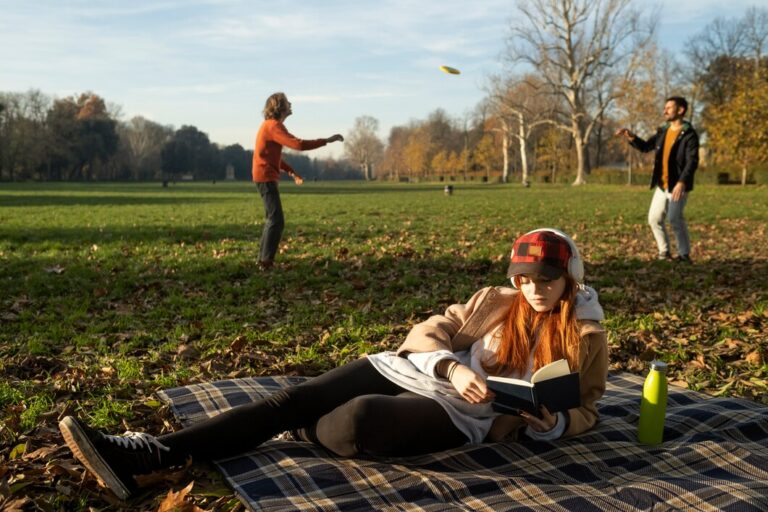
Finding engaging ways to keep children entertained without phones, tablets, televisions, or computers can sometimes feel challenging. However, children do not need digital entertainment to enjoy their free time, explore new interests, or develop important life skills. With a little creativity and encouragement, parents can introduce screen free activities for kids that make everyday moments more enjoyable while supporting learning, imagination, physical movement, and family bonding.
From painting and storytelling to outdoor adventures and simple household games, there are countless ways to help children enjoy their surroundings without relying on digital devices. These activities can be adapted for different ages, interests, and available spaces, making them suitable for busy weekdays, weekends, school holidays, and rainy afternoons.
Introducing screen-free activities does not mean removing technology from children’s lives completely. Instead, it means creating a healthy balance between digital entertainment and experiences that encourage children to think, move, create, communicate, and explore independently. Parents can begin with small changes, such as setting aside time for an offline game after school or planning a family activity during the weekend.
This guide explores 30 practical ideas, explains why they are valuable, and offers simple strategies to make activities without technology a natural part of family life.
Why Encourage Screen-Free Activities?
Digital devices can provide educational content and entertainment, but children also benefit from spending time away from screens. A balanced routine gives them opportunities to develop skills through hands-on experiences, social interactions, movement, and imaginative play.
Here are some important reasons to introduce screen-free activities into children’s daily routines.
1. Encourage Creativity and Imagination
When children draw, build, invent stories, or create pretend worlds, they learn to use their imagination. Unlike watching a video, open-ended play encourages children to decide what happens next and develop their own ideas.
Creative activities for kids, including crafting, painting, and imaginative storytelling, allow them to experiment without worrying about producing perfect results.
2. Support Physical Activity
Outdoor games, dancing, cycling, and simple obstacle courses encourage children to move their bodies. Regular movement can support coordination, balance, muscle development, and overall physical well-being.
Activities that involve walking, running, jumping, and stretching also provide a refreshing alternative to sitting for long periods.
3. Develop Problem-Solving Skills
Puzzles, building challenges, science experiments, and treasure hunts encourage children to think critically. They learn to test ideas, recognize patterns, solve problems, and try different approaches when something does not work.
These experiences help children build confidence in their ability to overcome everyday challenges.
4. Strengthen Family Relationships
Family activities give parents and children opportunities to communicate, cooperate, laugh, and share experiences. Playing a board game, preparing a meal together, or reading a story creates meaningful moments without digital distractions.
These shared experiences can also help parents better understand their children’s interests and personalities.
5. Encourage Independence
Certain screen-free activities allow children to play, explore, and learn independently without needing continuous supervision from adults. Reading, drawing, building with blocks, and organizing toys can help children practise making decisions and managing their own time.
Independent play also gives parents time to complete household tasks while children remain engaged in age-appropriate activities.
30 Screen-Free Activities for Kids
The best activities are not necessarily expensive or complicated. Many use materials already available at home, while others require nothing more than a little outdoor space and enthusiasm.
The following ideas are divided into five categories so parents can choose activities according to their children’s interests, energy levels, and available time.
Creative Activities
Ideas 1–6: Encourage imagination, artistic expression, and hands-on learning.
1. Drawing and colouring
Give children paper, crayons, coloured pencils, or washable markers and invite them to draw whatever they imagine. They could create pictures of animals, imaginary cities, favourite characters, or places they would like to visit.
For an added challenge, suggest drawing a picture using only three colours or illustrating a story they recently heard. Encourage children to enjoy each step of the activity instead of worrying about how the final outcome looks.
2. DIY crafts using recycled materials
Gather reusable items such as empty cardboard boxes, paper tubes, used magazines, and clean packaging materials for creative projects. Children can turn these items into robots, toy houses, miniature vehicles, or decorative objects.
This activity encourages creativity while introducing the idea of reusing materials instead of immediately throwing them away. Adults should supervise scissors, adhesives, and any materials that could present choking or injury risks.
3. Make homemade playdough
Homemade playdough can provide hours of creative entertainment. Children can shape animals, letters, pretend food, flowers, and miniature landscapes.
With adult supervision, prepare a simple dough using flour, salt, water, and a little cooking oil. Keep it away from young children who might put it in their mouths, particularly because salt-containing dough can be harmful if swallowed.
4. Create a storybook
Ask children to invent a story and illustrate it on folded sheets of paper. They can develop characters, create a beginning and ending, and draw pictures to accompany each page.
Younger children may dictate their stories while an adult writes the words. Older children can practise writing dialogue, creating story titles, and developing their own plots.
5. Build with blocks or cardboard
Building towers, bridges, houses, and imaginary structures is an excellent way to combine creativity with basic engineering concepts.
Challenge children to construct the tallest tower possible or build a bridge that can support a small toy. Encourage them to experiment when their structures fall or need improvement.
6. Paint rocks or make greeting cards
Collect suitable smooth stones or use thick paper to create colourful artwork. Children can paint patterns, flowers, animals, or abstract designs. They can also make handmade birthday cards or thank-you notes for friends and relatives.
Use washable, child-safe materials and allow artwork to dry in a designated area.
Outdoor Activities
Ideas 7–12: Help children move, explore nature, and enjoy fresh air.
7. Go on a nature scavenger hunt
Prepare a list of things to find outdoors, such as a fallen leaf, a smooth stone, a bird, a flower, or something shaped like a circle.
Children can search in a garden, park, or suitable outdoor area. For younger children, use simple descriptions rather than written instructions. Encourage observation without picking protected plants or disturbing wildlife.
8. Organize a backyard obstacle course
Use cones, cushions placed safely on the ground, hoops, and other suitable objects to create a simple course. Children can practise hopping, balancing, crawling, and walking around obstacles.
Adapt the difficulty to their age and abilities, and avoid slippery surfaces, unstable furniture, or elevated obstacles that could cause falls.
9. Plant seeds or care for a garden
Give children responsibility for watering plants, filling small pots with soil, or planting easy-to-grow seeds. Beans, herbs, and certain flowers can be rewarding choices.
They can observe changes over time and learn about sunlight, water, plant growth, and patience. Gardening is one of the most useful activities without technology because it combines movement, observation, and responsibility.
10. Have a bicycle or scooter session
If children have suitable equipment, arrange time for cycling or scooting in a safe, traffic-free area. Ensure that helmets and protective equipment fit correctly and that children follow appropriate safety rules.
Younger children can practise balancing or navigating simple paths under adult supervision.
11. Play classic outdoor games
Introduce games such as hopscotch, tag, hide-and-seek, skipping rope, or a simple ball-throwing challenge.
These familiar games require minimal equipment and can be enjoyed with siblings, parents, or friends. They also help children practise coordination, turn-taking, and cooperation.
12. Explore clouds and nature
Spend time observing the sky, identifying cloud shapes, listening to birds, or noticing changes in the weather.
Ask children what shapes they can see in the clouds or how many different sounds they can identify. This simple activity encourages curiosity and gives children a chance to slow down and pay attention to their surroundings.
Educational Activities
Ideas 13–18: Turn everyday moments into opportunities for discovery.
13. Solve age-appropriate puzzles
Jigsaw puzzles, shape puzzles, word puzzles, and simple logic games can help children practise concentration and pattern recognition.
Choose puzzles that offer a manageable challenge. If a child becomes frustrated, work through a few pieces together before allowing them to continue independently.
14. Conduct simple science experiments
Try safe, supervised experiments such as observing how different objects float in water or comparing how quickly ice melts in different locations.
Ask children to predict what will happen, observe the results, and explain what they notice. Avoid experiments involving dangerous chemicals, open flames, or unsupervised electrical equipment.
15. Create a reading corner
Create a cozy reading corner stocked with age-appropriate storybooks, illustrated books, comics, and interesting nonfiction titles. Allow children to choose what interests them instead of always assigning a particular book.
Parents can read aloud to younger children, while older children may enjoy reading independently or discussing their favourite characters afterward.
16. Play word and number games
Use activities such as spelling challenges, counting games, mental arithmetic, rhyming contests, or word association.
For example, one person names an animal, and the next person must name another animal beginning with the last letter of the previous word. Adjust the rules to suit the child’s age and learning level.
17. Try a kitchen learning activity
Invite children to help prepare a simple snack, measure ingredients, sort vegetables, or count pieces of fruit.
Cooking introduces practical mathematics, sequencing, observation, and basic food knowledge. Adults should handle sharp knives, hot surfaces, and other potentially dangerous equipment.
18. Make a homemade treasure map
Draw a simple map of a room, garden, or other safe area. Mark locations where clues can be found and create a final destination containing a small toy, sticker, or handwritten message.
Children can also design maps for siblings or parents, developing spatial awareness and practising written instructions.
Family Activities
Ideas 19–24: Make shared time more interactive and enjoyable.
19. Enjoy a family board-game evening
Choose board games, card games, or simple matching games that everyone can enjoy. Younger children may prefer games with straightforward rules, while older children might enjoy strategy-based challenges.
Rotate who chooses the game so that everyone gets an opportunity to share their preferences.
20. Cook a meal together
Give each family member a suitable task, such as washing vegetables, mixing ingredients, arranging a plate, or setting the table.
Children often enjoy participating when they feel their contribution matters. Cooking together can also encourage conversations about food, family traditions, and everyday responsibilities.
21. Have a family storytelling session
Take turns adding sentences to a shared story. One person starts with a character or situation, and each family member introduces a new event.
The story might involve a talking animal, a mysterious garden, or a journey to an imaginary planet. There are no strict rules, making this a fun activity for different ages.
22. Arrange an indoor picnic
Prepare simple snacks, spread a blanket on the floor, and enjoy a meal together in a different setting.
Children can help pack the food, choose the location, and create decorations. This small change in routine can make an ordinary afternoon feel special without requiring expensive supplies.
23. Plan a family talent show
Invite everyone to perform something they enjoy, such as singing, dancing, telling jokes, performing magic tricks, or reciting a poem.
Make participation voluntary and emphasize encouragement rather than competition. The aim is to have fun together and celebrate each person’s interests.
24. Complete a household treasure hunt
Hide safe objects around the house and provide clues that lead children from one location to another.
For younger children, use picture clues. Older children can solve riddles or simple mathematical problems to discover each hiding place. Make sure the search takes place in a safe space, well away from breakable items and potentially dangerous areas.
Independent Activities
Ideas 25–30: Give children opportunities to explore interests at their own pace.
25. Create a quiet reading session
Encourage children to spend a short period reading a book of their choice. Provide a comfortable seat and a peaceful environment.
For children who are not yet confident readers, picture books, audiobooks played without browsing screens, or shared reading can provide alternatives.
26. Start a personal journal
Older children can write about their day, record interesting observations, draw pictures, or list things they would like to learn.
A journal does not need to follow a strict format. Children can use it to express feelings, track hobbies, or record achievements in a private and comfortable way.
27. Build a toy world
Provide toy animals, blocks, dolls, small vehicles, or other age-appropriate play materials. Children can create a farm, city, school, space station, or imaginary kingdom.
Open-ended play allows them to develop their own rules and stories without needing step-by-step instructions.
28. Listen to music and dance
Play suitable music and let children move freely, create dance routines, or invent actions that match the rhythm.
Music can offer a change of pace when children need to release energy indoors. Adjust the sound to a suitable level and ensure children have plenty of room to move around without bumping into objects.
29. Sort and organize a collection
Children may enjoy arranging toy cars, collecting leaves, sorting coloured objects, or organizing books by size or subject.
Turn the activity into a personal project rather than a demand to clean the entire room. It can support classification, decision-making, and a sense of responsibility.
30. Create an invention challenge
Offer a small collection of safe household materials and ask children to invent something useful or imaginative.
They might design a pencil holder, a paper airplane, a toy house, or a device for moving lightweight objects. Invite them to explain how their invention works and what they would change next time.
How to Get Kids Interested in Offline Activities
Introducing no screen activities for kids can take time, particularly when children are accustomed to frequent digital entertainment. A gradual, positive approach is usually more practical than abruptly removing every device.
Start With Their Interests
Observe what your child already enjoys. A child who likes drawing might enjoy crafts, while one who loves movement may prefer cycling, dancing, or obstacle courses.
Use familiar interests as a starting point before introducing unfamiliar activities.
Offer Choices Instead of Commands
Rather than saying, “Put away your tablet and find something to do,” offer two or three alternatives.
For example, ask whether your child would prefer to build a cardboard house, play a board game, or go outside. Having a choice can make the transition feel more positive.
Participate at the Beginning
Some children need help getting started. Spend the first 10–15 minutes drawing together, beginning a puzzle, or setting up a game.
Once they understand the activity, gradually step back and let them continue independently if they wish.
Keep Expectations Realistic
Not every activity will hold a child’s attention for a long time. Younger children may move between activities frequently, while older children may prefer longer projects.
Allow children to experiment, change activities, and occasionally experience boredom. Quiet moments can give them an opportunity to develop their own ideas.
Avoid Turning Every Activity Into a Lesson
Although educational activities have benefits, children also need unstructured play. A cardboard box does not have to become a formal engineering project, and drawing does not need to involve practising specific skills.
Let children enjoy activities for their own sake.
Create a Screen-Free Activity Box
An activity box makes it easier to find something enjoyable when children say they are bored. It also reduces the time parents spend searching for supplies.
Choose a container that children can access safely and fill it with a selection of reusable materials.
Items to include:
- Paper, notebooks, crayons, pencils, and washable markers.
- Child-safe scissors, glue sticks, and craft paper.
- Building blocks, simple puzzles, and playing cards.
- Picture books, story prompts, and activity sheets.
- Clean cardboard, paper rolls, and reusable craft materials.
- Small toys, figurines, and pretend-play accessories.
- Nature observation cards and simple scavenger-hunt lists.
Keep small parts away from young children who might swallow them, and store potentially hazardous tools separately.
Organize Activities by Effort
It can be helpful to separate materials according to the amount of preparation required.
| Activity type | Examples | Best time to use |
| Quick activities | Colouring, card games, word puzzles | Short breaks |
| Creative projects | Crafts, painting, storybooks | Free afternoons |
| Active activities | Dance, movement games, obstacle courses | When children have extra energy |
| Quiet activities | Reading, journaling, drawing | Calm periods |
| Family activities | Cooking, board games, storytelling | Evenings or weekends |
Refresh the box occasionally by rotating materials or adding a new challenge. There is no need to purchase new supplies every week. Reusing familiar materials in different ways can be just as engaging.
Building a Balanced Technology Routine
A healthy approach to technology does not require eliminating every screen. Instead, parents can establish predictable routines that leave room for schoolwork, recreation, sleep, physical activity, and relationships.
1. Establish Clear Screen-Time Expectations
Decide when devices can be used and when they should be put away. Expectations should reflect the child’s age, developmental needs, school requirements, and family circumstances.
For example, a family might agree to enjoy an offline activity before recreational screen time or keep devices away during meals.
2. Create Screen-Free Zones
Consider keeping bedrooms, dining areas, or designated family spaces free from recreational screens at certain times.
Having consistent locations where devices are put away can make it easier for everyone to follow the same routine.
3. Protect Sleep and Rest
Avoid allowing recreational device use to regularly replace sufficient sleep, bedtime routines, or calming activities. Reading, quiet conversation, drawing, and preparing for the next day can help create a predictable evening routine.
Age-appropriate sleep recommendations and individual needs should guide family schedules.
4. Model Healthy Technology Habits
Children notice how adults use their devices. Parents can demonstrate balanced habits by putting phones away during conversations, choosing outdoor activities, and avoiding unnecessary interruptions during family time.
A household routine works better when expectations apply to adults as well as children.
5. Make Offline Activities Easy to Access
Keep books, games, art supplies, and outdoor equipment where children can find them. Plan simple family activities in advance, especially during weekends and school holidays.
When enjoyable alternatives are readily available, children may find it easier to spend time away from screens.
6. Adapt the Routine as Children Grow
Activities and daily schedules that appeal to preschool-aged children may not be appropriate for teenagers with different interests and needs. Older children should be included in conversations about device use, school responsibilities, social connections, and personal interests.
Work together to establish realistic boundaries rather than relying entirely on punishment or rigid rules.
The goal is not to make technology the enemy. It is to help children develop habits that allow them to enjoy digital tools while participating fully in offline life.
Frequently Asked Questions
1. Which screen-free activities are most enjoyable and beneficial for children?
Some of the best options include drawing, reading, building with blocks, playing board games, gardening, outdoor scavenger hunts, cooking with family members, and creating handmade crafts. The right choice depends on a child’s age, interests, abilities, and available space.
2. How can I keep my child busy without a phone or tablet?
Offer a few simple choices, such as colouring, puzzles, storytelling, building toys, or outdoor games. Prepare an activity box with accessible supplies and help your child get started when necessary. Gradually encourage independent play instead of expecting children to remain occupied by themselves immediately.
3. Are screen-free activities educational?
Yes. Many offline activities support learning through practical experience. Puzzles encourage problem-solving, reading supports language development, cooking introduces measurement, and gardening helps children observe natural processes. Creative play can also encourage imagination, communication, and decision-making.
4. How much time should children spend engaging in screen-free activities each day?
There is no single amount that works for every child. Screen-free time should be planned around age, sleep needs, schoolwork, physical activity, family responsibilities, and the child’s overall routine. Follow age-appropriate guidance for recreational screen use and make sure digital activities do not consistently displace essential daily experiences.
5. Which fun activities can children enjoy at home without using screens?
Children can draw, paint, read, build with blocks, make crafts, solve puzzles, prepare simple snacks with adult supervision, create a treasure hunt, or perform a family talent show. These ideas require little preparation and can be adapted for small living spaces.
6. How do I encourage a child who prefers video games?
Start with activities that connect to the child’s existing interests. A child who enjoys video games might like designing a board game, building a model of a favourite fictional world, drawing characters, or creating a paper-based adventure game.
Avoid treating every transition away from screens as a punishment. Offer appealing alternatives, involve the child in planning, and introduce changes gradually.
7. Are screen-free activities expensive?
No. Many require only everyday household materials. Drawing with existing stationery, playing word games, reading library books, taking nature walks, making cardboard crafts, and telling stories together can all be inexpensive options.
Conclusion
Introducing screen free activities for kids is a practical way to create more opportunities for creativity, movement, learning, independence, and family connection. From simple crafts and reading sessions to outdoor adventures and shared cooking projects, these 30 ideas show that children can enjoy a wide range of experiences without depending on digital entertainment.
Parents do not need to organize elaborate activities every day or remove technology completely. Starting with one screen-free period, offering a few interesting choices, and keeping everyday materials accessible can make a meaningful difference over time.
The key is to create a daily routine that suits your family’s lifestyle and makes spending time away from screens enjoyable for everyone. When children have opportunities to explore their interests, play freely, spend time outdoors, and connect with others, offline activities can become a natural and rewarding part of everyday life.
About the Author